Why zero-knowledge infrastructure matters now
Zero-knowledge infrastructure has moved from theoretical cryptography to a strategic imperative for enterprise adoption strategy. Regulatory pressure and scalability demands are converging, making privacy-preserving verification essential rather than optional.
Historically, enterprises faced a binary choice: expose sensitive data to third-party validators or accept operational friction. Zero-knowledge architecture eliminates this trade-off. By generating cryptographic proofs that confirm compliance without disclosing raw data, organizations can satisfy auditors while maintaining data sovereignty.
This shift is critical as regulatory frameworks like GDPR and emerging AI governance laws tighten around data minimization principles. The infrastructure supports enterprise adoption strategy by enabling scalable, auditable, and privacy-compliant operations without compromising user trust or competitive advantage.
Aligning zero-knowledge infrastructure with business goals
Zero-knowledge (ZK) proofs are not merely a cryptographic novelty; they are a structural shift in how enterprises handle trust. For legal and compliance teams, the goal is not to adopt technology for its own sake, but to solve specific friction points in regulatory reporting, data minimization, and cross-border transfers. An enterprise adoption strategy must map these cryptographic capabilities directly to business outcomes.
Regulatory reporting and auditability
Traditional compliance relies on sharing raw data with auditors or regulators, increasing the attack surface for breaches. ZK infrastructure allows an enterprise to prove compliance without revealing the underlying data. For example, a financial institution can generate a proof that its transactions adhere to anti-money laundering (AML) thresholds without exposing customer identities or transaction histories. This shifts the audit process from "show us everything" to "verify this proof," reducing liability and operational overhead.
Data minimization and privacy
The General Data Protection Regulation (GDPR) and similar frameworks mandate data minimization: collect only what is necessary, and only for as long as necessary. ZK proofs align naturally with these principles. By computing proofs on encrypted or minimal datasets, organizations can satisfy regulatory requirements for data processing while keeping sensitive information private. This reduces the risk of non-compliance penalties and builds trust with users who are increasingly wary of data exploitation.
Cross-border data transfers
Data residency laws vary significantly across jurisdictions. Moving data across borders often triggers complex legal reviews and potential bans. ZK infrastructure enables verification of data integrity and compliance status without physically moving the data across borders. A company in the EU can verify that a server in the US is handling data according to EU standards, without transferring the data itself. This simplifies global operations and reduces legal friction.
Mapping capabilities to outcomes
To execute this strategy, leadership must move beyond technical feasibility to business value. The following table contrasts traditional data handling with ZK-infrastructure approaches for key compliance scenarios.
| Compliance Scenario | Traditional Approach | ZK Infrastructure Approach |
|---|---|---|
| Regulatory Audits | Share raw logs and records with auditors | Generate cryptographic proofs of compliance |
| Cross-Border Transfers | Transfer data to jurisdiction of choice | Verify compliance without data movement |
| User Privacy | Store and protect PII in databases | Prove attributes without revealing PII |
Market context and adoption signals
The shift toward privacy-preserving infrastructure is gaining momentum. Market analysis indicates growing interest in zero-knowledge technologies as enterprises seek to balance innovation with compliance. Monitoring market trends can help organizations time their adoption strategies effectively.
This market movement reflects broader institutional confidence in ZK technology. As infrastructure matures and costs decrease, the barrier to entry for enterprise adoption lowers, making it a viable strategy for organizations of all sizes. Executives should view this not as a speculative bet, but as a necessary evolution of data governance.
Phase the rollout to manage risk and build internal trust
Deploying zero-knowledge infrastructure is not a single event but a structural shift in how your enterprise handles data. Jumping straight to full-scale integration often triggers compliance bottlenecks and operational friction. A phased approach allows you to validate the technology against specific regulatory requirements while demonstrating tangible value to stakeholders.
Start with isolated, high-value use cases where privacy is a competitive differentiator. This could be anonymizing customer data for machine learning training or securing sensitive financial records in a controlled environment. By proving the concept in a sandbox, you build the internal confidence needed to expand.
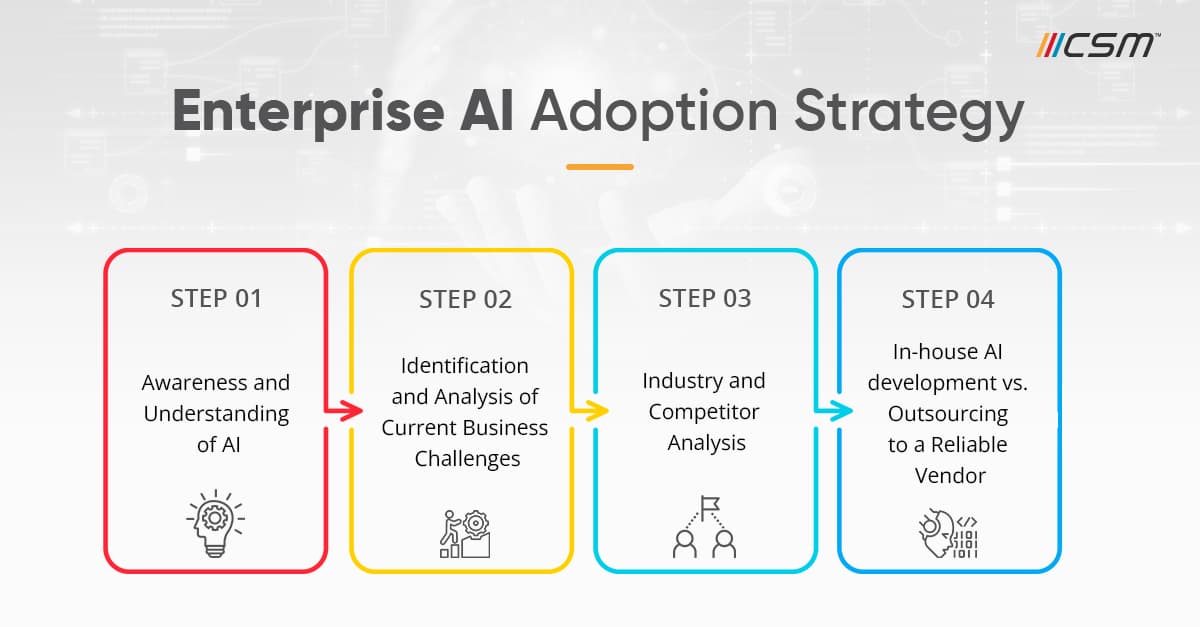
Select a specific workflow where data sensitivity creates a bottleneck. The goal is to isolate variables so you can measure the impact of zero-knowledge proofs on latency and cost without disrupting core business operations. Focus on scenarios where traditional encryption still leaves residual risk or where data minimization is legally required.
Implement the zero-knowledge protocol in a non-production environment. This step is about technical validation: can your current infrastructure support the computational overhead of ZK proofs? Document the performance metrics, specifically looking at proof generation time and verification speed, to establish a baseline for future scaling.
Before expanding, engage your legal and compliance teams to review the PoC results. Verify that the zero-knowledge architecture meets the specific requirements of GDPR, HIPAA, or other relevant regulations. This audit should confirm that the cryptographic guarantees align with your organization's data governance policies and that no unintended data leakage occurs during the proof generation process.
Once the pilot passes legal and technical review, gradually integrate the solution into production workflows. Expand to additional data sets or use cases only after the initial deployment is stable. This iterative expansion ensures that any issues are caught early and that your team has the operational experience to manage the new infrastructure at scale.
This structured rollout minimizes the risk of widespread disruption while providing clear milestones for measuring success. By focusing on specific, manageable phases, you create a resilient foundation for enterprise adoption that balances innovation with regulatory rigor.
The chart above reflects market sentiment around enterprise technology adoption, which often correlates with broader infrastructure investments. While zero-knowledge infrastructure is a niche field, its success depends on the same principles of trust and transparency that drive major enterprise software trends.
Navigating regulatory and compliance hurdles
Zero-knowledge proofs offer a powerful solution for data privacy, but they introduce a distinct set of compliance challenges that traditional IT infrastructure never faced. For enterprise adoption strategy, the primary hurdle is not just technical feasibility, but legal defensibility. Regulators require transparency and auditability, yet ZK systems are designed to minimize data exposure. This creates a tension between privacy and the regulatory mandate for oversight.
The core of this challenge lies in auditability. Traditional systems allow auditors to inspect raw data to verify compliance. In a ZK environment, auditors must verify the correctness of the proof itself without seeing the underlying data. This requires a new framework for regulatory engagement, where trust is placed in the cryptographic protocol and the implementation rather than direct data access. Organizations must establish clear protocols for how proofs are generated, verified, and stored to satisfy legal requirements.
Key management is another critical area. In ZK systems, the keys used to generate proofs are often more sensitive than the data itself. If a private key is compromised, an attacker can generate fraudulent proofs that appear valid. Enterprise strategies must include robust key management practices, such as hardware security modules (HSMs) and multi-party computation, to protect these keys. The loss of a key can mean the loss of access to critical business functions, making resilience a compliance requirement.
Jurisdictional differences further complicate adoption. Data privacy laws like the GDPR in Europe and various state-level regulations in the US have different requirements for data retention and deletion. ZK systems, which often rely on immutable ledgers for proof verification, may conflict with the "right to be forgotten." Enterprises must carefully map their ZK infrastructure to local legal frameworks, potentially requiring hybrid approaches that separate proof storage from data storage to ensure compliance across different jurisdictions.
The growth of enterprise blockchain and ZK infrastructure investment reflects this evolving landscape. As seen in the market trends, companies are increasingly allocating resources to build compliant ZK systems. This investment is not just about technology, but about building the legal and operational frameworks necessary to support it. Enterprises that navigate these hurdles effectively will gain a significant competitive advantage in the privacy-first economy.
Measure success with concrete KPIs
Evaluating the enterprise adoption strategy for zero-knowledge infrastructure requires moving beyond abstract promises to measurable outcomes. Success is defined by three specific pillars: cost efficiency, compliance velocity, and risk reduction. Without clear key performance indicators (KPIs), it is difficult to justify the initial capital expenditure to stakeholders or to refine the implementation roadmap.
The most immediate metric is the reduction in compliance overhead. Automated zero-knowledge proof verification eliminates manual data reconciliation, directly lowering operational costs. According to industry analysis, enterprises that successfully integrate these privacy-preserving technologies often see a significant drop in administrative burden, allowing legal and compliance teams to focus on strategic oversight rather than data scrubbing [[src-serp-2]].
Risk reduction is equally critical. By minimizing data exposure, organizations reduce their attack surface. This translates to lower potential liability from breaches and stricter adherence to regulations like GDPR or HIPAA. Tracking the frequency of compliance audits and the time required to produce audit trails provides a tangible measure of this risk mitigation.
To contextualize the broader market shift toward privacy-centric infrastructure, consider the trajectory of enterprise technology adoption. The following chart illustrates the general trend in enterprise technology valuation, reflecting the growing premium placed on secure, compliant digital infrastructure.
These metrics form the foundation of a robust enterprise adoption strategy. By focusing on cost, compliance, and risk, organizations can quantify the value of zero-knowledge proofs and ensure long-term strategic alignment.
Frequently asked questions about zero-knowledge infrastructure
Zero-knowledge infrastructure is no longer a theoretical concept for niche crypto projects; it is becoming a standard requirement for enterprise data privacy. As organizations navigate complex regulatory landscapes like GDPR and HIPAA, the ability to prove compliance without exposing raw data is becoming a strategic differentiator.
Below, we address common questions about integrating zero-knowledge proofs (ZKPs) into enterprise adoption strategies, drawing on current industry standards and regulatory expectations.
Understanding these fundamentals helps leaders move beyond hype and evaluate ZK infrastructure as a practical tool for risk management and competitive advantage.
No comments yet. Be the first to share your thoughts!