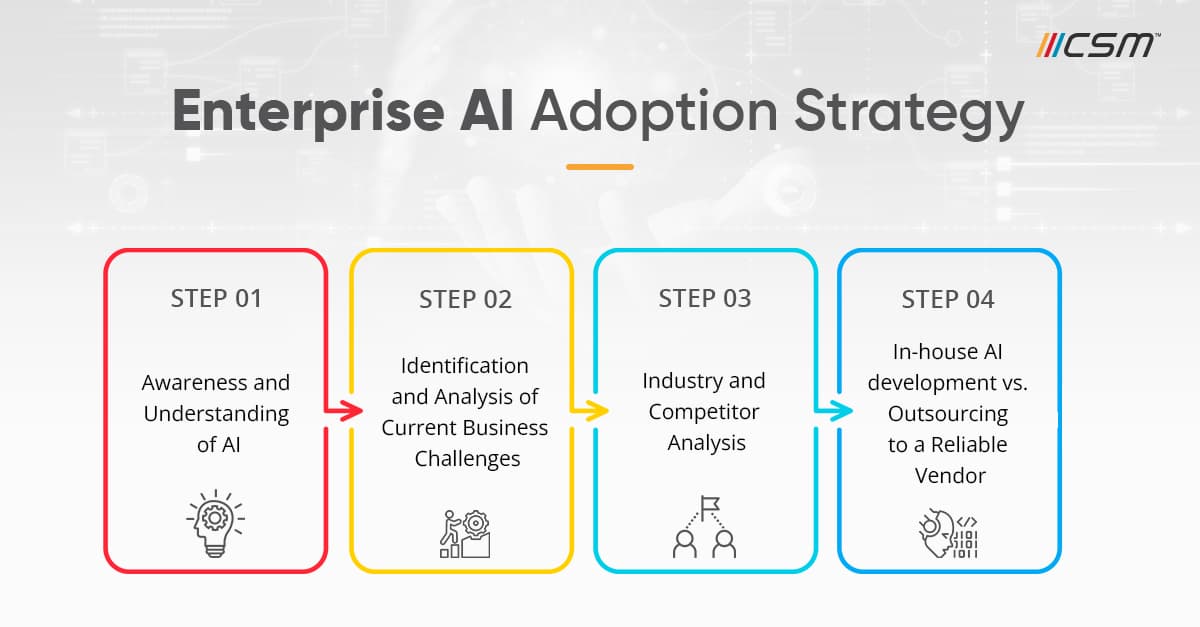
Defining the enterprise adoption strategy
Enterprise adoption is not merely a technical roadmap for integrating blockchain nodes or smart contracts; it is a strategic blueprint for transforming how the business operates, competes, and manages risk. When treating Web3 infrastructure as a core component of enterprise architecture, the focus must shift from experimental pilots to production-scale integration that aligns with rigorous compliance and liquidity requirements.
A common pitfall for financial institutions is viewing this transition solely through a technology lens. As noted by industry analysts, an enterprise plan is fundamentally about operational transformation. It requires aligning decentralized protocols with existing regulatory frameworks, ensuring that new infrastructure does not create silos but rather enhances the resilience of the broader financial ecosystem. This alignment is critical for mitigating the high-stakes risks associated with digital asset custody, transaction finality, and cross-border settlement.
The path forward involves a deliberate shift from isolated proof-of-concepts to integrated systems. This means establishing clear governance models for digital identity, defining liquidity management protocols for native assets, and ensuring that operational workflows can handle the 24/7 nature of blockchain networks. Without this strategic alignment, organizations risk regulatory friction and operational inefficiencies that outweigh the benefits of decentralization.
To validate the market context for these infrastructure decisions, it is useful to monitor the performance of major digital assets that often drive institutional interest and liquidity flows. The following chart and widget provide real-time data on market conditions that influence enterprise Web3 investment decisions.
Market research for RWA infrastructure
Tokenized real-world assets (RWA) have moved past the speculative phase into a period of steady, institutional-grade growth. The market is no longer driven by speculative narratives but by the tangible utility of bringing traditional finance on-chain. For enterprise strategy, this shift signals a move toward infrastructure that supports high-volume, low-friction transactions in assets like treasury bills and real estate.
The underlying technology is proving its worth through live market data. The performance of tokenized funds and the broader crypto infrastructure provides a clear signal of institutional confidence. Rather than relying on static projections, we can look at current market behavior to understand how enterprises are allocating capital.
This live data reveals a maturing ecosystem. As major players integrate RWA into their portfolios, the infrastructure requirements become more complex. Enterprises need systems that can handle regulatory compliance, liquidity management, and seamless integration with existing financial rails. The focus is shifting from "if" to "how"—building robust frameworks that support these assets at scale.
The transition to tokenized real-world assets is not just a technological upgrade; it is a fundamental change in how value is stored and transferred. By grounding our strategy in current market data and official sources, we can build an adoption plan that is both resilient and forward-looking.
Compliance and regulatory alignment
In the world of enterprise strategy, regulatory compliance is not just a box to check; it is the primary gatekeeper for infrastructure selection. Before a single line of code is deployed, your legal and risk teams must determine if the underlying Web3 protocol can withstand scrutiny from bodies like the SEC or FinCEN. If the infrastructure cannot support mandatory KYC (Know Your Customer) and AML (Anti-Money Laundering) checks, it is not enterprise-ready, regardless of its technical performance.
This requirement fundamentally shifts how you evaluate vendors. You must prioritize infrastructure that offers built-in compliance tools, such as permissioned nodes or identity-verified access layers. Choosing a purely permissionless chain for a high-stakes financial application introduces unacceptable liability. The infrastructure must allow you to prove that every participant has been vetted, ensuring that your strategy remains compliant with global financial regulations.
To understand the current regulatory landscape, it helps to look at the market signals. Regulatory clarity often correlates with institutional confidence, which is reflected in asset prices and trading volumes. The following chart illustrates the recent volatility and market sentiment surrounding regulated crypto assets, which often move in tandem with regulatory news cycles.
The chart above tracks Coinbase Global Inc., a proxy for the broader regulated crypto market. Notice how sharp price movements often align with regulatory announcements. This volatility underscores why a robust enterprise strategy must account for regulatory risk. Infrastructure that lacks clear compliance pathways exposes the enterprise to sudden legal shifts, making it a risky long-term investment. Your strategy should focus on partners who actively engage with regulators, rather than those who operate in gray areas.
While the chart shows market reaction, the PriceWidget below provides a real-time snapshot of the asset class most commonly associated with these regulatory discussions. Monitoring these metrics helps your team stay aware of the market’s response to compliance developments.
Ultimately, compliance is the foundation of trust. By embedding KYC/AML capabilities into your infrastructure selection criteria, you protect the enterprise from legal exposure and build a sustainable path for Web3 adoption. This approach ensures that your strategy is not only innovative but also defensible in a highly regulated environment.
Technical infrastructure integration
Enterprise adoption of Web3 requires more than just a token strategy; it demands a robust technical backbone that mirrors the reliability of traditional financial infrastructure. The core challenge lies in bridging the gap between decentralized protocols and the rigid, compliance-heavy environments of legacy ERP systems. This integration isn't about replacing existing systems but rather extending their capabilities through secure, verifiable data layers.
At the foundation of this architecture is node infrastructure. Enterprises cannot rely on public, unverified nodes for high-stakes transactions. Instead, they must deploy dedicated, redundant node clusters to ensure uptime and data integrity. This infrastructure acts as the primary interface between the blockchain and internal business logic, handling transaction validation and state synchronization. For live verification of the underlying asset performance that often drives these integrations, monitoring real-time market data is essential.
Smart contract audits form the next critical layer. Before any code interacts with enterprise funds or sensitive data, it must undergo rigorous, third-party security reviews. These audits identify vulnerabilities in logic, access controls, and gas optimization. In the enterprise context, this process is not a one-time event but a continuous cycle of testing and verification, ensuring that every update to the smart contract maintains the same level of security and compliance as the original deployment.
Finally, interoperability with legacy ERP systems is the linchpin of adoption. Web3 infrastructure must communicate seamlessly with systems like SAP or Oracle, translating blockchain events into standard business records. This requires middleware that can handle data normalization, identity management, and regulatory reporting. The following comparison highlights how tokenized asset settlement differs from traditional methods in speed, cost, and compliance, illustrating the tangible benefits of this technical integration.
| Feature | Traditional Settlement | Tokenized Settlement | Compliance Layer |
|---|---|---|---|
| Speed | T+2 to T+3 days | Near-instant | Manual reconciliation |
| Cost | High intermediary fees | Reduced operational costs | Automated reporting |
| Transparency | Limited to participants | Public ledger visibility | Real-time audit trails |
| Intermediaries | Multiple custodians | Direct peer-to-peer | Smart contract enforced |
This technical foundation ensures that the enterprise strategy is not just a theoretical exercise but a deployable, secure, and scalable reality. By prioritizing node reliability, rigorous auditing, and seamless ERP integration, organizations can leverage Web3 infrastructure without compromising on the stability required for high-stakes financial decisions.
Measuring ROI and Scalability
Defining success for an enterprise strategy requires moving beyond speculative valuation to tangible operational metrics. In the context of Web3 infrastructure, ROI is not merely a financial return but a measure of how effectively the technology reduces friction in high-stakes financial workflows. To validate these gains, you must track three core pillars: liquidity depth, transaction costs, and operational efficiency.
1. Verify Liquidity Depth
Liquidity depth determines whether an enterprise can execute large transactions without significant slippage. Shallow pools create volatility that makes Web3 assets unsuitable for institutional treasury management. You must measure the order book depth and pool reserves to ensure the infrastructure can handle the volume required for daily operations. A robust liquidity profile is the foundation of trust; without it, the technology remains a novelty rather than a utility.
2. Track Transaction Costs
Transaction costs directly impact the bottom line, especially for high-frequency settlement layers. Enterprise adoption fails if the gas fees or network costs erode the margin of the underlying financial transaction. Monitor the average cost per transaction across different network conditions. If the cost to settle a trade exceeds the value of the trade itself, the strategy is not scalable. Use live data to benchmark current network fees against traditional banking rails to prove cost efficiency.
3. Measure Operational Efficiency
The ultimate goal of an enterprise strategy is to streamline operations. Measure the reduction in settlement time from T+2 to near-instant finality. Track the decrease in manual reconciliation efforts and the reduction in counterparty risk. These efficiency gains compound over time, providing a clearer ROI than speculative asset appreciation alone. When the infrastructure automates compliance and settlement, the operational burden shifts from human labor to code, ensuring consistency and auditability.
No comments yet. Be the first to share your thoughts!