Defining enterprise adoption strategy
Enterprise adoption strategy is not just about buying software. It is about integrating Web3 infrastructure into core business operations with clear ROI and compliance. Many organizations mistake a pilot project for a strategy. A pilot tests a feature. A strategy transforms the business model.
The shift from experimental to operational requires more than technical integration. It demands a framework that aligns technology with financial outcomes. According to recent industry analysis, successful adoption hinges on understanding business needs before selecting technologies [EY]. This means mapping every blockchain interaction to a measurable efficiency gain or revenue stream.
Compliance is the backbone of this integration. Web3 infrastructure operates in a regulatory gray area for many legacy firms. An enterprise adoption strategy must prioritize auditability and data sovereignty. Without these pillars, the technology remains a cost center rather than a growth engine. The goal is seamless integration, where the infrastructure disappears into the background of daily operations, enabling speed and trust without friction.
Infrastructure requirements for scale
Enterprise adoption of blockchain and AI technologies demands more than just software licenses; it requires a foundational infrastructure capable of handling massive throughput without compromising security. The technical backbone must support horizontal scaling, ensuring that as transaction volumes grow, the network remains responsive and cost-effective. This means moving away from monolithic architectures toward modular, cloud-native systems that can distribute load dynamically.
Security and interoperability are equally critical. Enterprise environments rarely operate in silos; they need systems that can communicate across different blockchain networks and legacy IT systems. Standards like W3C Decentralized Identifiers (DIDs) and verifiable credentials provide the framework for this interoperability, allowing disparate systems to trust and exchange data securely. Without these standards, integration becomes a fragmented, manual process that defeats the purpose of automation.
To understand the scale potential of these networks, it helps to look at live market data. The following chart illustrates the transaction volume and network activity for a major enterprise-focused blockchain, demonstrating how infrastructure handles peak loads.
The infrastructure must also be resilient against downtime. Redundant nodes, distributed ledger technologies, and robust consensus mechanisms ensure that the system remains available even during partial network failures. This reliability is non-negotiable for enterprises where downtime translates directly to financial loss and reputational damage. By prioritizing these technical requirements, organizations can build a scalable, secure, and interoperable foundation for future growth.
Essential enterprise adoption tools
Selecting the right infrastructure is the difference between a pilot that fades and a platform that scales. Enterprises managing Web3 assets, smart contracts, and digital identity need tools that prioritize security, auditability, and seamless integration with existing stacks. The following recommendations cover the core categories required for a robust adoption strategy.
Hardware Security Modules (HSMs)
For enterprises handling private keys and cryptographic operations, hardware security modules provide the necessary physical isolation. These devices protect sensitive data from software-based attacks and ensure that key generation and signing occur in a tamper-resistant environment. Leading providers like Thales and Utimaco offer FIPS 140-2 Level 3 certified solutions that integrate with major cloud platforms. When evaluating HSMs, prioritize vendors with established enterprise support contracts and clear compliance certifications.
Smart Contract Auditing Platforms
Before any smart contract goes live, it must undergo rigorous scrutiny. Automated auditing tools like Slither and Mythril offer quick static analysis to catch common vulnerabilities, while manual audits by firms like OpenZeppelin or Trail of Bits provide deep logic verification. For a balanced approach, combine automated scanning for immediate feedback with professional manual reviews for critical financial logic. This two-tiered strategy catches both syntax errors and complex business logic flaws.
Digital Identity Management
Managing decentralized identifiers (DIDs) and verifiable credentials requires specialized tooling. Platforms like Microsoft Entra Verified ID and Polygon ID offer SDKs and infrastructure to issue, store, and verify digital identities without exposing unnecessary personal data. These tools help enterprises comply with GDPR and other privacy regulations while enabling seamless user onboarding. Look for solutions that support W3C standards to ensure interoperability across different blockchain networks.
Enterprise Blockchain Frameworks
The foundation of any Web3 adoption strategy is the underlying blockchain framework. Hyperledger Fabric and Corda remain top choices for permissioned enterprise networks due to their privacy features and high transaction throughput. Hyperledger Fabric offers modular architecture for complex business networks, while Corda focuses on confidential, point-to-point transactions. Evaluate these frameworks based on your team's existing technical expertise and the specific privacy requirements of your use case.
| Tool Category | Primary Use Case | Key Feature |
|---|---|---|
| Hardware Security Modules (HSMs) | Key management and cryptographic operations | Physical isolation and tamper resistance |
| Smart Contract Auditors | Code security and vulnerability detection | Automated scanning + manual verification |
| Digital Identity Platforms | Managing DIDs and verifiable credentials | W3C standard compliance and privacy |
| Enterprise Blockchain Frameworks | Building permissioned networks | Modular architecture and high throughput |


As an Amazon Associate, we may earn from qualifying purchases.
Enterprise AI adoption metrics and investment trends
The gap between experimental AI pilots and full-scale enterprise adoption is closing rapidly, but the path to scale remains complex. According to recent analysis by EY, successful AI adoption is no longer just about deploying tools; it requires a comprehensive approach to understanding business needs and ensuring seamless integration across all layers of the organization [EY]. This shift marks a transition from isolated proof-of-concepts to strategic, enterprise-wide infrastructure.
Investment trends reflect this urgency. Major partnerships, such as the alliance between Microsoft, NVIDIA, and Anthropic, underscore the scale of capital flowing into enterprise AI models, with combined partnership values exceeding $45 billion [Digital Applied]. These investments are not merely speculative; they are foundational bets on the infrastructure that will support the next generation of enterprise applications. Companies that fail to align their infrastructure with these emerging standards risk falling behind in both efficiency and innovation.
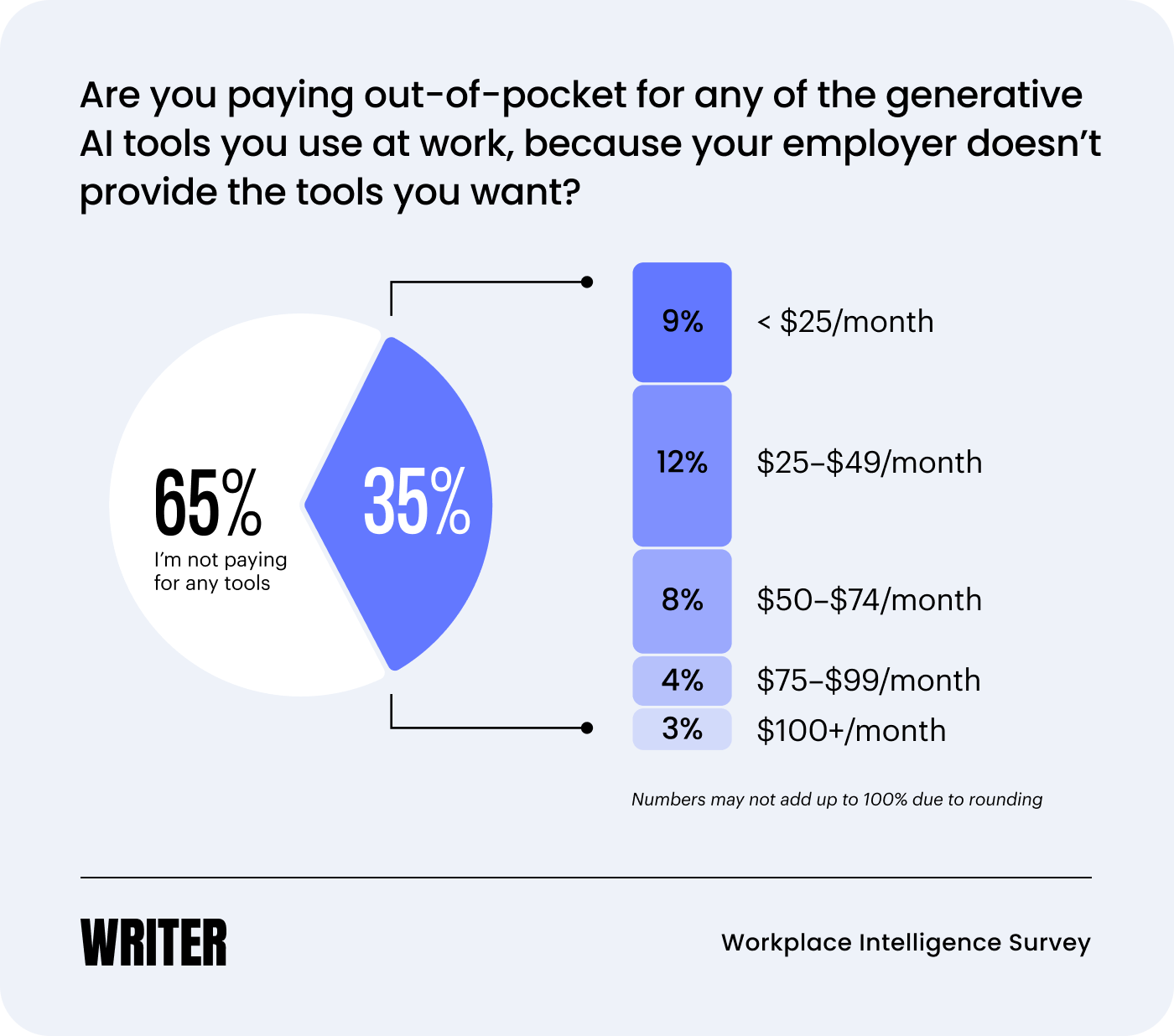
To validate these strategies, leaders are turning to concrete adoption metrics. While many organizations have started small, the focus has shifted to measuring ROI and operational impact at scale. The key is to move beyond simple deployment counts and instead track how AI integrates into core business processes. This data-driven approach allows enterprises to justify continued investment and refine their strategies based on real-world performance rather than theoretical potential.
Executing the adoption roadmap
Strategy fails without execution. Moving from planning to full AI integration requires a disciplined workflow that aligns technical teams with business objectives. This section outlines the concrete steps to operationalize your enterprise AI adoption strategy, ensuring every deployment delivers measurable value.
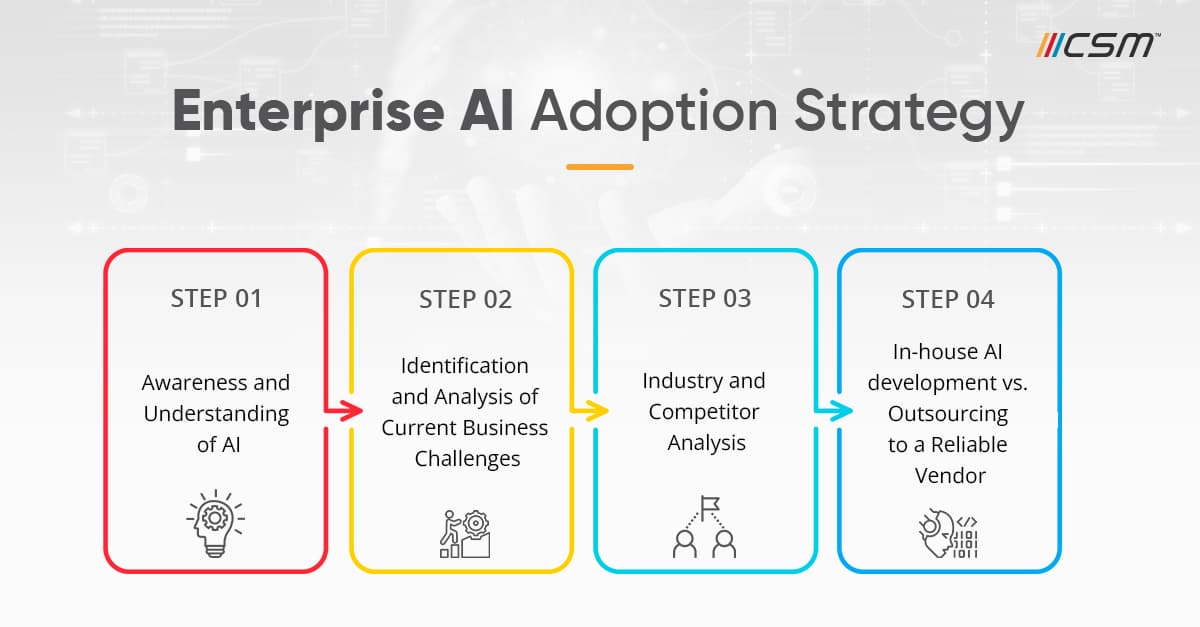
Start by identifying specific problems AI will solve. Avoid vague innovation goals; instead, target measurable outcomes like reduced operational costs or improved customer response times. This clarity prevents scattered initiatives and duplicated efforts across departments.
Choose tools that fit your existing infrastructure. Evaluate platforms based on scalability, security compliance, and integration capabilities rather than hype. Prioritize solutions that offer robust API support to ensure seamless connectivity with legacy systems.
Launch small-scale pilots to test feasibility. Select use cases with high visibility and clear success metrics. These pilots serve as proof points, allowing teams to refine processes and build confidence before broader deployment.
Expand successful pilots across the organization. Establish governance frameworks to manage data quality, model performance, and ethical AI use. Ensure continuous monitoring and feedback loops to adapt to changing business needs.
Break down silos between IT, data science, and business units. Create shared KPIs and regular communication channels to keep all stakeholders engaged. Leadership must champion the initiative to ensure sustained commitment and resource allocation.
-
Security audit completed
-
Stakeholder alignment confirmed
-
Infrastructure capacity verified
Executing this roadmap transforms abstract strategy into tangible results. By following these steps, leaders can manage the complexities of enterprise adoption with confidence and precision.
No comments yet. Be the first to share your thoughts!