Why institutions are shifting to Web3
The narrative around institutional Web3 adoption has shifted from speculative asset accumulation to infrastructure utility. Financial institutions are no longer asking if they should participate, but how to integrate blockchain capabilities into existing enterprise stacks. This transition mirrors the broader enterprise technology cycle: early adopters now face the pressure of scaling operations, managing risk, and justifying ROI through tangible efficiency gains rather than market timing.
The financial drivers are becoming clearer. Traditional settlement layers often involve multiple intermediaries, leading to delays and higher costs. Web3 infrastructure offers a path to near-instant settlement and programmable compliance. For large-scale operations, the ability to automate complex financial instruments through smart contracts reduces operational friction. This is not about replacing legacy banking; it is about layering a more efficient, transparent, and auditable network on top of it.
However, the stakes are high. Institutional adoption requires a different risk profile than retail trading. Security, regulatory compliance, and interoperability with existing systems are non-negotiable. The focus is on building robust, permissioned, or hybrid solutions that can handle enterprise-grade throughput. The market is moving away from hype and toward infrastructure that can withstand scrutiny and deliver consistent performance.
Mapping the infrastructure stack
Enterprise Web3 is not consumer crypto. The consumer layer prioritizes speed and low fees; the institutional layer prioritizes finality, compliance, and auditability. Scaling infrastructure requires separating these concerns. You cannot build a bank-grade settlement layer on the same rails as a meme coin exchange. The stack must support deterministic outcomes, not just probabilistic ones.
At the base, you choose between public chains and permissioned ledgers. Public chains offer transparency but face regulatory uncertainty. Permissioned ledgers offer control but lack the liquidity and composability of open networks. The choice depends on your risk appetite and regulatory jurisdiction.
Above the ledger, you need middleware that handles identity and access. Consumer wallets use seed phrases; institutions use multi-signature schemes and hardware security modules. This is not a feature; it is a requirement. Without proper key management, the entire stack is exposed to single points of failure.
The final layer is data availability and oracle services. Smart contracts are blind without external data. Enterprises need verifiable oracles that feed real-world data into the chain. This layer ensures that the contract executes based on truth, not speculation. The infrastructure must be robust enough to handle high throughput without compromising security.
| Layer | Consumer Crypto | Institutional Web3 |
|---|---|---|
| Settlement | Public Chains (ETH, SOL) | Permissioned Ledgers / Private L2s |
| Identity | Seed Phrases / Wallets | MPC / HSM / Multi-Sig |
| Compliance | None / Optional KYC | Built-in KYC/AML / On-chain Audit |
| Data | Oracles (Optional) | Verifiable Oracles (Required) |
| Governance | Token Voting | Multi-Sig / Off-chain Consensus |
The gap between these two worlds is widening. Institutions are not just adopting Web3; they are building parallel infrastructures that mimic the best of both. They take the transparency of public chains and wrap it in the security of private systems. This hybrid approach is becoming the standard for enterprise adoption.
Compliance and risk management
Institutional adoption of Web3 infrastructure is not a technology problem; it is a compliance problem. For banks, asset managers, and large enterprises, the permissionless nature of public blockchains is a liability until it is wrapped in strict regulatory frameworks. The primary keyword for this transition is institutional Web3 compliance, and it requires treating regulatory adherence as a core architectural constraint rather than an afterthought.
The foundation of this trust is anti-money laundering (AML) and know-your-customer (KYC) integration. Unlike traditional finance, where identity verification happens at the bank branch, Web3 identity is pseudonymous. To bridge this gap, institutions must implement "travel rule" compliant middleware that links on-chain wallet addresses to verified real-world identities. This ensures that every transaction can be traced back to a responsible entity, satisfying regulators who demand transparency in cross-border value transfers.
Data privacy adds another layer of complexity. Regulations like the EU’s General Data Protection Regulation (GDPR) grant individuals the "right to be forgotten," which conflicts with the immutable nature of blockchain ledgers. Institutions must use zero-knowledge proofs or off-chain data storage to verify compliance without permanently storing sensitive personal data on-chain. This technical approach allows firms to prove they are compliant without violating privacy laws.
Risk management also extends to smart contract security. Institutions cannot deploy capital into protocols that have not undergone rigorous third-party audits. This means integrating automated monitoring tools that flag anomalous transactions or potential exploits in real-time. The goal is to create a "compliance-by-design" environment where regulatory checks are embedded into the code, reducing human error and operational risk.
Ultimately, compliance is the gatekeeper for institutional capital. Without robust AML, KYC, and privacy mechanisms, Web3 infrastructure remains a niche experiment rather than a scalable enterprise solution. Firms that prioritize these standards from the start will be the ones to capture the next wave of institutional adoption.
Integrating smart contracts safely
Deploying smart contracts in a high-stakes environment requires a shift from "move fast and break things" to "move deliberately and verify everything." For institutions, a single vulnerability can mean irreversible financial loss and regulatory scrutiny. The goal is to build a deployment pipeline that treats code as a liability until proven otherwise.
Define the threat model
Before writing a single line of Solidity, map out what you are protecting. Identify the critical assets: is it user funds, sensitive data, or governance rights? This exercise forces you to define attack vectors early. You need to know who can interact with the contract, what permissions they hold, and what happens if those permissions are compromised. A clear threat model guides your subsequent audit and testing phases.
Conduct rigorous internal testing
Unit tests are the baseline, but they are not enough. You need integration tests that simulate real-world interactions, including edge cases like network congestion or unexpected token behavior. Use fuzzing tools to generate thousands of random inputs to find boundary conditions that manual testing might miss. This stage is about breaking your own code before anyone else does. If the logic doesn't hold up under chaotic conditions, it won't hold up in production.
Engage independent third-party audits
Never rely solely on internal reviews for mainnet deployment. Hire reputable, independent security firms to audit your code. Treat their findings as mandatory, not optional. Every high-severity and medium-severity finding must be resolved and verified before moving forward. This step is your primary insurance against catastrophic failure. It provides an external layer of scrutiny that your internal team, no matter how skilled, cannot replicate.
Implement a phased rollout
Once audited, do not launch everything at once. Start with a limited release or a testnet deployment to monitor real-time behavior. Use this phase to validate gas costs, transaction throughput, and user interaction patterns. If issues arise, you can pause or patch without risking the entire system. This controlled approach allows you to gather data and adjust parameters before committing to a full-scale institutional rollout.
Map critical assets and potential attack vectors to guide your security strategy.
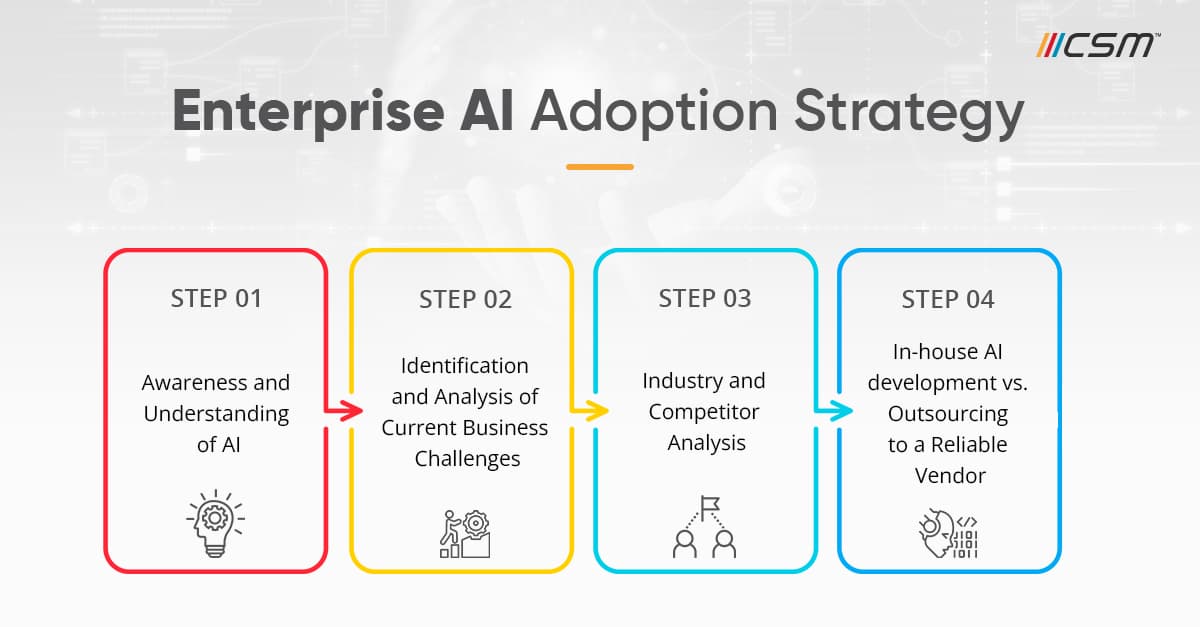
Use fuzzing and integration tests to break the code under chaotic conditions.
Resolve all high and medium severity findings from independent security firms.
Monitor testnet or limited release data before full mainnet deployment.
Measuring ROI and adoption metrics
Treat this step as a welfare screen for Enterprise Adoption. Compare the source, the animal's visible condition, the seller's care knowledge, the paperwork, and the transport plan before you commit. A good purchase path should make the dragon's health easier to verify, not harder. Pause before paying if any part of the chain is unclear. Confirm the exact animal, pickup or shipping timing, heat-pack plan when relevant, return policy, and the supplies you need at home for the first week.
Use the checklist as a welfare screen: verify the source, health signs, enclosure readiness, paperwork, and transport plan before paying.
Enterprise adoption checklist
Before committing capital to Web3 infrastructure, institutions must validate their strategy against rigorous operational standards. The gap between a successful pilot and a scalable production environment is often where compliance failures occur.
- Define clear use cases: Focus on specific business problems like cross-border settlements or tokenized assets rather than adopting blockchain for its own sake.
- Assess regulatory alignment: Ensure your infrastructure provider meets current financial regulations, including KYC/AML requirements and data residency laws.
- Evaluate security protocols: Verify that the solution offers institutional-grade custody, key management, and audit trails.
- Plan for interoperability: Confirm the system can integrate with existing legacy enterprise software and databases.
Risk Note: Failing to address regulatory compliance early can lead to significant legal penalties and operational shutdowns.
Validate these steps with internal legal and IT teams before proceeding to implementation.
Common questions on Web3 infrastructure
Scaling Web3 infrastructure for institutions requires more than just technical integration; it demands a strategic overhaul of how data, identity, and value move through your organization. The following questions address the core operational realities of deploying blockchain-based systems in high-stakes enterprise environments.
No comments yet. Be the first to share your thoughts!