Defining the enterprise adoption strategy
An enterprise adoption strategy for Web3 is not a roadmap for speculation. It is a disciplined framework for integrating distributed ledger technology into core business operations. While consumer crypto markets often chase short-term price volatility, enterprise infrastructure prioritizes three non-negotiable pillars: reliability, compliance, and interoperability. The goal is to build systems that function with the same predictability as traditional financial rails, not as experimental assets.
The distinction lies in the underlying objective. Consumer adoption focuses on individual gain and accessibility. Enterprise adoption focuses on operational efficiency, data integrity, and regulatory alignment. When a financial institution or large corporation evaluates Web3, they are not asking how much value they can extract from a token. They are asking whether the technology can reduce settlement times, eliminate reconciliation errors, and provide an immutable audit trail that satisfies auditors and regulators.
This shift requires a fundamental change in how infrastructure is selected and deployed. Enterprise-grade Web3 solutions must offer high throughput, low latency, and clear governance models. They must support identity verification (KYC/AML) natively and provide granular access controls. Without these features, Web3 remains a novelty rather than a viable business tool. The strategy must therefore begin with a clear assessment of which business processes actually benefit from decentralization, rather than adopting the technology for its own sake.
Building this strategy requires treating Web3 infrastructure as a critical component of the enterprise tech stack. This means rigorous vendor due diligence, stress testing under real-world load, and ensuring seamless integration with existing legacy systems. The focus is on creating a robust, compliant foundation that enables innovation without exposing the organization to unnecessary operational or regulatory risk. Success is measured by reduced costs, increased speed, and enhanced transparency—not by market cap.
Market signals and infrastructure readiness
The shift from experimental pilot programs to production-ready infrastructure is no longer a theoretical possibility; it is a measurable market reality. Enterprise leaders are moving past the proof-of-concept phase, integrating autonomous agents directly into core business workflows to drive tangible efficiency gains. This transition marks a critical inflection point in the broader enterprise adoption strategy, where technical reliability now outweighs novelty.
Current data suggests that organizations successfully navigating this shift are seeing significant operational improvements, including 24/7 support capabilities and substantial reductions in manual processing time. The market is responding to this maturity. Institutional interest is no longer driven by speculative hype but by the demonstrable utility of scalable, secure infrastructure that can handle enterprise-grade workloads. This is the foundation upon which sustainable Web3 and AI integration is built.
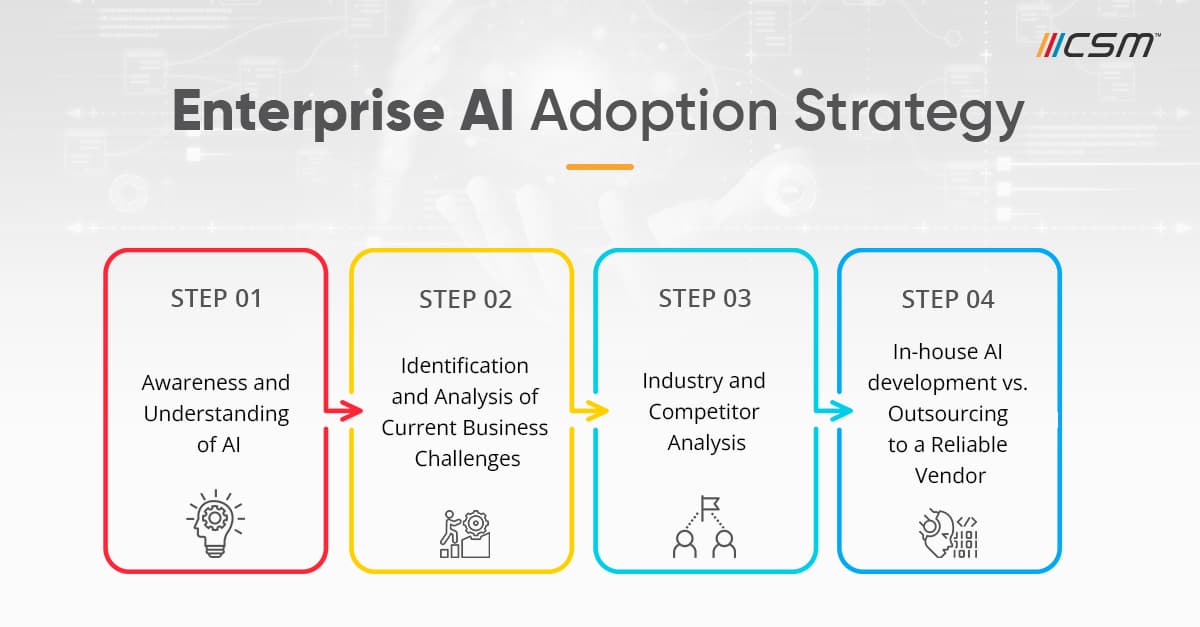
To validate this trajectory, we look at the performance of key infrastructure tokens and related financial instruments. These metrics provide a clear window into institutional confidence and the underlying health of the ecosystem. A technical analysis of these assets reveals patterns consistent with maturing markets, where volatility decreases and volume increases as major players commit capital.
This performance is not isolated. It reflects a broader trend where financial institutions are treating Web3 and AI infrastructure as essential utilities rather than optional experiments. The convergence of these technologies is creating a robust framework for the next generation of enterprise applications, signaling that the time for cautious observation has passed.
Tokenizing Real-World Assets for Scale
Real-world asset (RWA) tokenization is the primary use case driving enterprise adoption of Web3 infrastructure. By converting ownership rights in physical assets—such as real estate, treasury bills, or commodities—into digital tokens on a blockchain, enterprises unlock new levels of liquidity and operational efficiency. This process transforms illiquid holdings into tradable digital instruments, allowing institutions to move capital faster and with greater transparency.
The core value proposition lies in fractional ownership. Traditional high-value assets often require significant capital barriers to entry. Tokenization breaks these assets into smaller, manageable units, democratizing access while maintaining institutional-grade security. This structural shift enables broader investor participation and secondary market trading that was previously constrained by legacy settlement systems.
To understand the operational impact, compare traditional asset management workflows with tokenized infrastructure. The table below highlights key differences in speed, cost, and transparency.
| Feature | Traditional Workflow | Tokenized Workflow |
|---|---|---|
| Settlement Time | T+2 to T+5 days | Minutes to seconds |
| Intermediaries | Multiple (brokers, custodians, clearinghouses) | Reduced (smart contract automation) |
| Fractionalization | Limited or high minimums | Flexible, low minimums |
| Transparency | Opaque, siloed records | Public, immutable ledger |
| Cost | High (fees, administrative overhead) | Lower (automated compliance) |
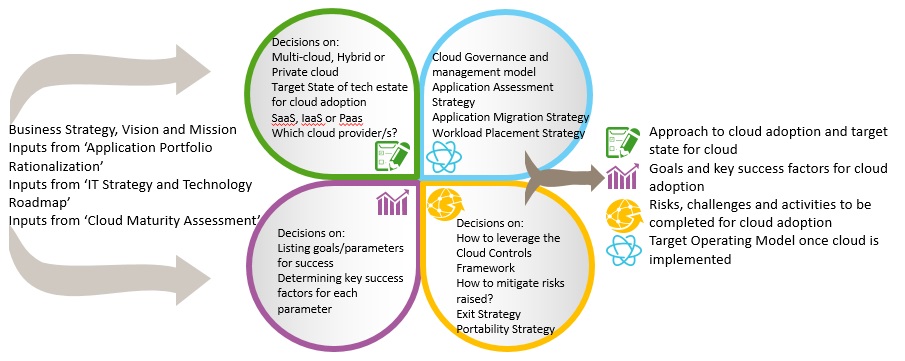
This shift is not merely technological but strategic. Enterprises adopting tokenization are redefining how they manage balance sheets and engage with capital markets. The infrastructure supports this scale by providing a secure, compliant layer for digital asset issuance and trading, ensuring that regulatory requirements are met without sacrificing the benefits of blockchain technology.
For enterprises evaluating this transition, the focus remains on integrating these tokenized assets into existing financial ecosystems. The goal is to enhance liquidity and reduce friction, creating a more efficient market for real-world value. As the infrastructure matures, we expect to see deeper integration with traditional finance, bridging the gap between legacy systems and the decentralized web.
Implementing the technical framework
Building an enterprise adoption strategy for Web3 requires moving beyond pilot projects into a structured, scalable infrastructure. This phase is less about experimentation and more about establishing the rigid technical controls that financial institutions demand. You need a framework that treats blockchain nodes not as experimental toys, but as critical financial assets requiring the same rigor as traditional core banking systems.
1. Establish decentralized governance models
Before writing code, define who controls the network. Enterprise adoption fails when governance is ambiguous. Implement a clear on-chain governance structure, such as a multi-signature wallet or a decentralized autonomous organization (DAO) with tiered voting rights. This ensures that critical protocol upgrades or treasury movements require consensus from designated stakeholders, aligning with your internal compliance requirements.
2. Conduct rigorous security audits
Security is the non-negotiable baseline for high-stakes finance. Do not rely on internal testing alone. Engage third-party auditors to perform smart contract audits and penetration testing on your node infrastructure. Look for firms with a track record in financial-grade security. Document every finding and remediation step. This audit trail is essential for regulatory reporting and proves to your risk management team that the infrastructure is hardened against common attack vectors like reentrancy or oracle manipulation.
3. Enforce interoperability standards
Web3 cannot exist in a silo. Your infrastructure must communicate seamlessly with legacy enterprise systems. Adopt established interoperability standards like ERC-20 for tokens and ERC-725 for identity management. This ensures that your Web3 assets can be tracked, audited, and integrated into your existing ERP and accounting software. Without these standards, you create data islands that defeat the purpose of a unified enterprise strategy.
4. Deploy phased rollout with monitoring
Avoid big-bang deployments. Implement a phased rollout strategy, starting with a permissioned testnet or a private sidechain. Monitor transaction throughput, latency, and gas costs closely. Use this phase to validate your security controls and governance workflows under real-world load. Once stable, gradually open access to internal departments before considering public mainnet deployment.
Engage specialized firms to audit your smart contracts. Focus on financial logic and access controls. Remediate all critical and high-severity vulnerabilities before any mainnet interaction.
Set up multi-signature wallets for treasury and governance actions. Define quorum requirements that match your corporate governance policies, ensuring no single point of failure.
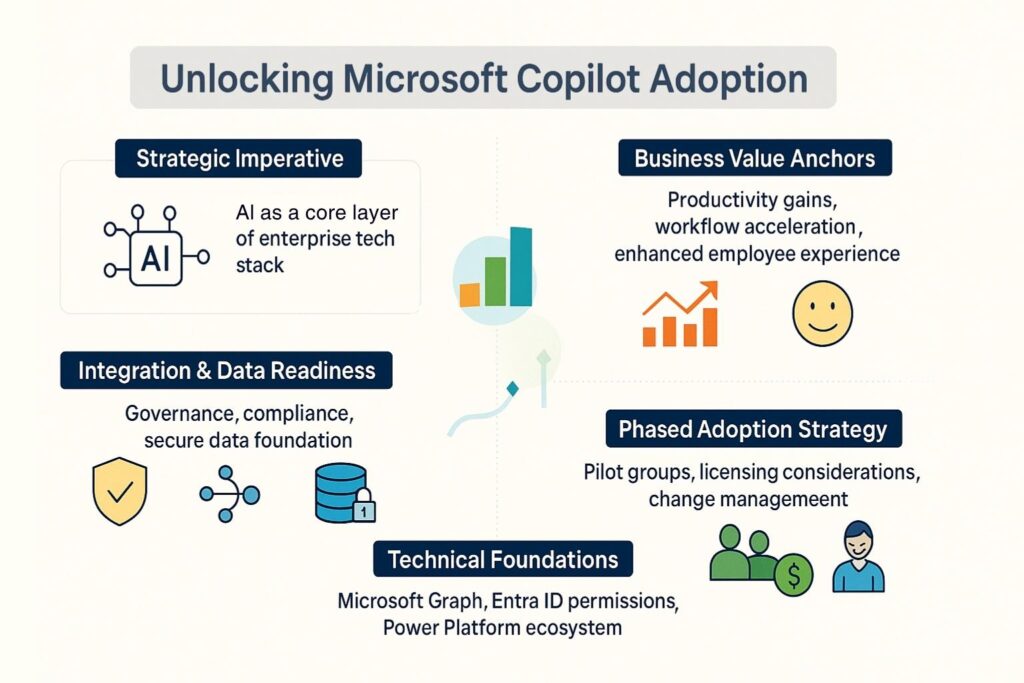
Build middleware to bridge Web3 data with your existing ERP and accounting systems. Use standardized APIs to ensure real-time visibility into on-chain assets.
5. Implement continuous compliance monitoring
Web3 is not a "move fast and break things" environment for enterprises. Implement continuous compliance monitoring tools that track transactions against sanctions lists and detect suspicious patterns in real-time. This proactive approach ensures that your enterprise adoption strategy remains compliant with evolving regulatory landscapes, from AML/KYC requirements to tax reporting obligations.
Key Takeaways
- Governance must be defined before deployment to align with corporate risk policies.
- Third-party security audits are mandatory for financial-grade Web3 infrastructure.
- Interoperability standards ensure integration with legacy enterprise systems.
- Phased rollouts allow for validation of security and governance controls.
Navigating compliance and risk
Enterprise Web3 adoption is not just a technical upgrade; it is a legal and operational overhaul. The high-stakes nature of blockchain infrastructure means that a single compliance failure can halt deployment or trigger severe regulatory penalties. Unlike traditional IT projects, Web3 introduces immutable record-keeping and decentralized governance, which complicates data privacy laws like GDPR and financial regulations like AML/KYC.
Your enterprise adoption strategy must prioritize regulatory clarity from day one. Regulatory frameworks vary significantly by jurisdiction; always consult legal experts before deploying tokenized assets. For instance, the European Union’s Markets in Crypto-Assets (MiCA) regulation sets a global precedent for stablecoin and asset issuance, while the US continues to navigate enforcement actions through the SEC and CFTC. Understanding these distinctions is critical for cross-border operations.
Risk mitigation requires a layered approach. First, implement robust identity verification protocols for all participants in the network. Second, ensure smart contract audits are conducted by reputable third parties before mainnet deployment. Finally, establish clear off-ramp and on-ramp procedures that comply with local banking regulations. Ignoring these steps turns a potential efficiency gain into a liability.
By treating compliance as a core feature rather than an afterthought, enterprises can scale Web3 infrastructure with confidence. This proactive stance protects shareholder value and ensures long-term viability in an evolving digital economy.
No comments yet. Be the first to share your thoughts!