Why enterprise adoption strategy matters now
The era of treating artificial intelligence as an experimental lab project is ending. In 2026, the primary challenge for enterprises is no longer proving that AI works, but scaling it reliably across regulated, high-stakes infrastructure. Moving from pilot to production requires a shift in focus from novelty to operational stability, security, and measurable return on investment.
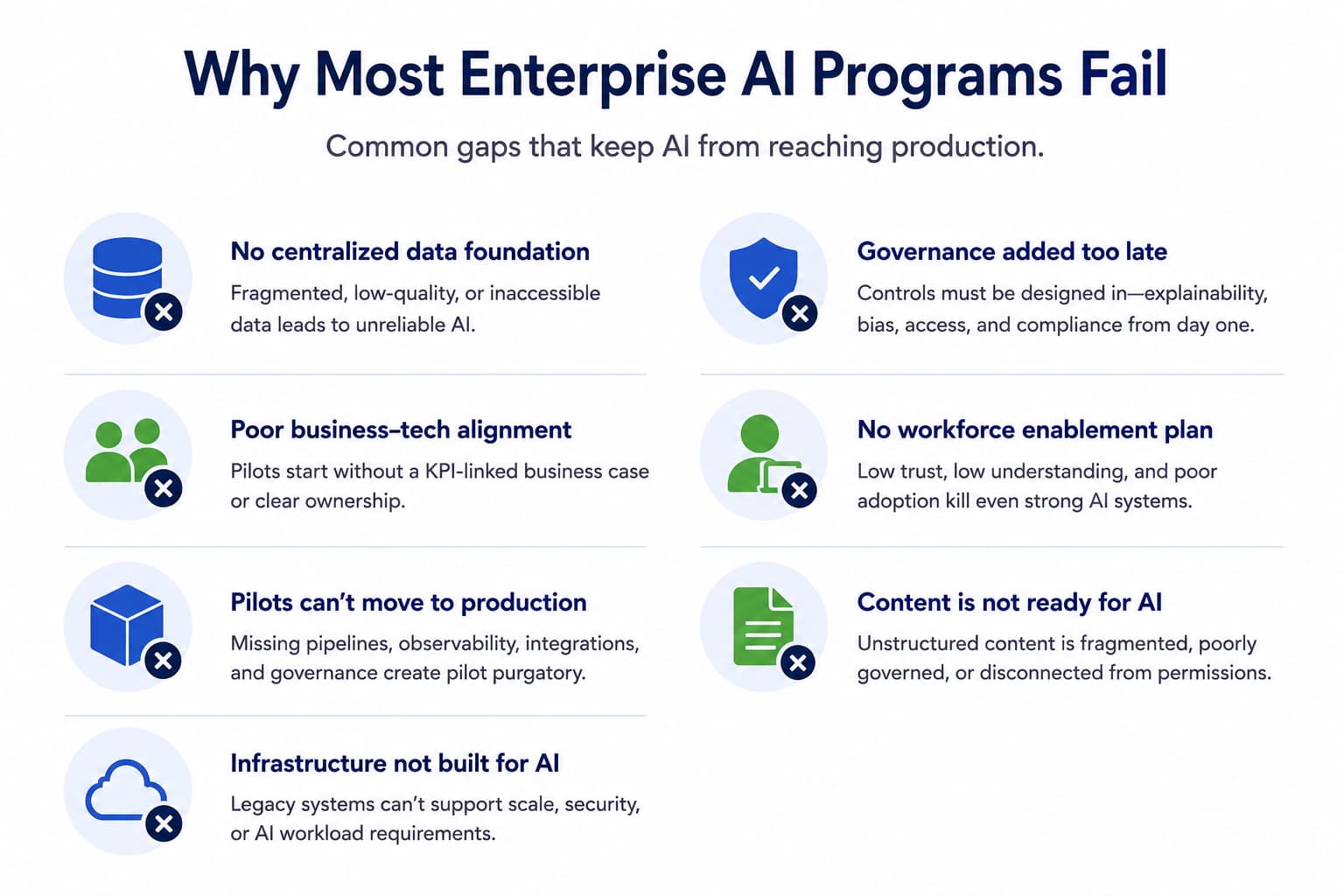
This shift is driven by the need for compliance and consistency. Early pilots often operate in isolated environments with limited data governance. As these models move into production, they must integrate with existing enterprise systems, adhere to strict data privacy laws, and maintain performance under heavy load. The cost of failure is no longer just a wasted experiment; it is a potential regulatory breach or a disruption to core business operations.
The infrastructure supporting this transition must be robust. It involves not just the models themselves, but the underlying compute, data pipelines, and monitoring tools that ensure these systems remain accurate and secure over time. Enterprises that treat AI adoption as a continuous engineering discipline rather than a one-time project will be the ones to capture value in the coming years.
Core pillars: governance, security, and integration
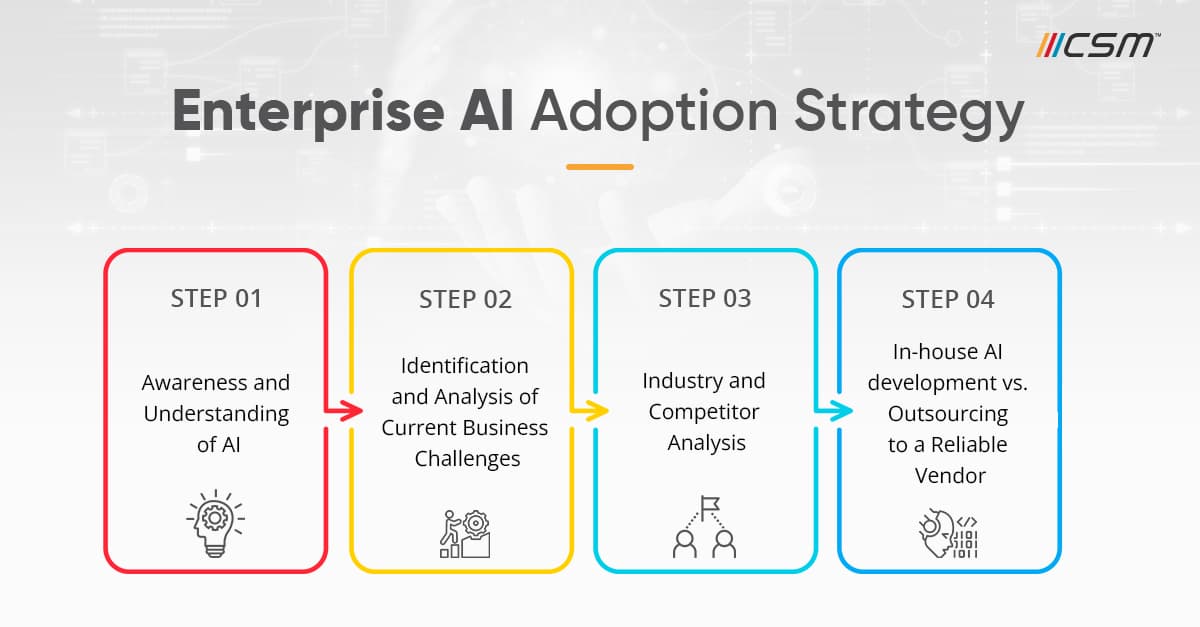
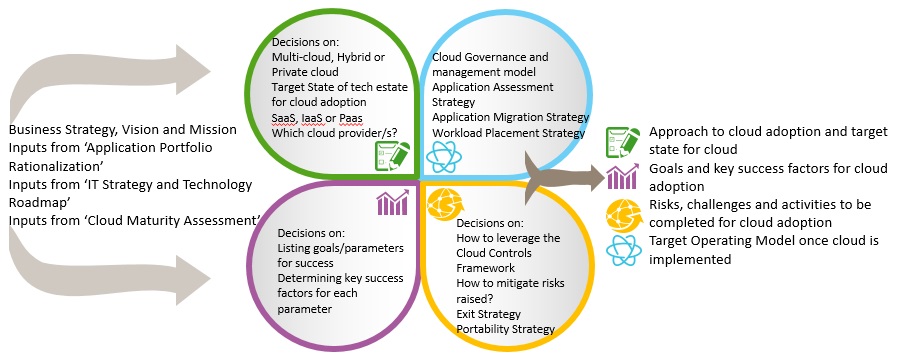
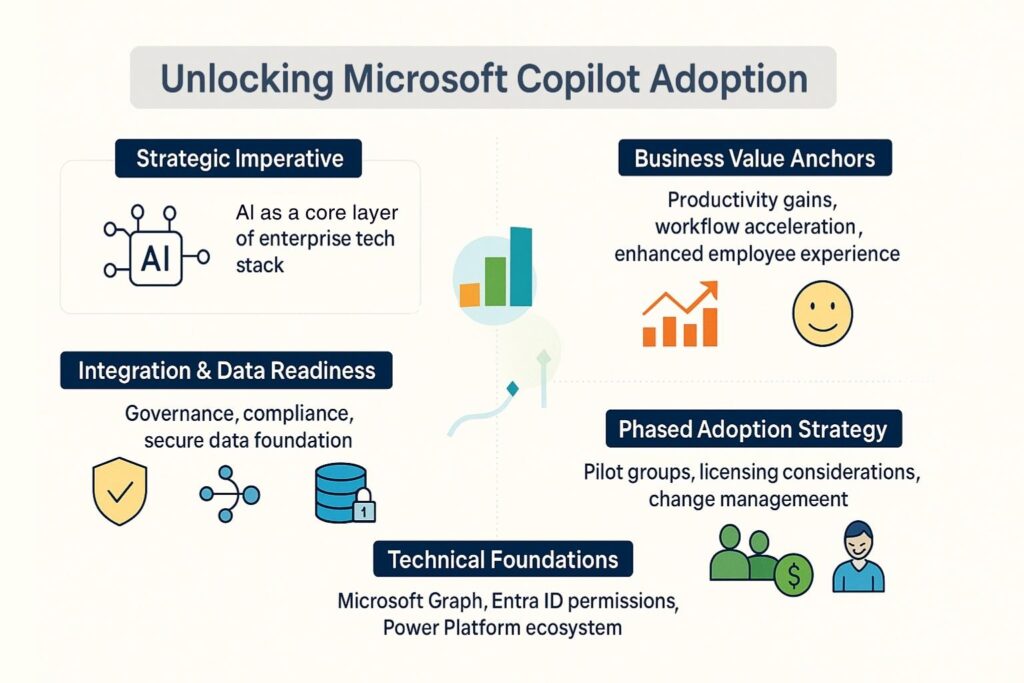
A scalable enterprise AI strategy rests on three structural pillars: governance, security, and legacy integration. Without these, AI initiatives remain experimental rather than operational. Microsoft’s Cloud Adoption Framework emphasizes that governance and security must be decided before production deployment, not as afterthoughts. EC-Council’s research on enterprise adoption further highlights that a business strategy is required to align these technical elements with organizational goals.
Governance ensures accountability and ethical compliance. It defines who can deploy models, how data is used, and what metrics determine success. Security protects sensitive data and prevents model misuse, especially in regulated industries. Integration connects AI tools to existing legacy systems, allowing new capabilities to function within current workflows rather than disrupting them.
These pillars work together to reduce risk and increase scalability. When aligned, they create a foundation for sustainable AI growth.
Buy versus build decisions
Choosing between off-the-shelf AI solutions and custom infrastructure is a foundational strategic decision. It requires balancing immediate operational speed against long-term competitive control. Most enterprises start with purchased tools to establish baseline capabilities, then gradually build proprietary layers where specific data advantages exist.
The Microsoft Cloud Adoption Framework emphasizes that this choice is not binary but a spectrum of governance and security requirements. Organizations must evaluate their existing cloud maturity and regulatory obligations before committing to either path. Purchased solutions offer rapid deployment and standardized security, while building allows for deep integration with legacy systems and unique data pipelines.
To visualize the trade-offs, compare the core dimensions of each approach below.
| Dimension | Buy (Off-the-Shelf) | Build (Custom) |
|---|---|---|
| Time to Market | Weeks | Months to Years |
| Control & Customization | Limited to vendor features | Full architectural control |
| Ongoing Cost | Predictable subscription fees | High engineering salaries & maintenance |
| Competitive Edge | Commodity advantage | Proprietary data moats |
Buy decisions reduce technical debt and allow teams to focus on application logic rather than infrastructure maintenance. Build decisions are justified only when the core AI capability directly differentiates your product in the market. For most financial and enterprise use cases, a hybrid approach—buying base models and building fine-tuning layers—offers the optimal balance of risk and innovation.
Measuring ROI and adoption metrics
Moving past the initial hype requires shifting focus from vanity metrics to tangible operational impact. Enterprise AI adoption has reached an inflection point, with $37 billion invested in generative AI alone in 2025—a 3.2x increase from the previous year. This surge in capital expenditure demands rigorous tracking to ensure infrastructure spending translates into measurable business value rather than just technical complexity.
Start by auditing your cloud infrastructure costs. As AI workloads scale, compute and storage expenses can spiral quickly. Use live market data to benchmark your spending against major cloud providers, ensuring your architecture remains cost-efficient as you scale.
Beyond cost control, track adoption velocity and utilization. Are teams actually using the tools, and are they completing tasks faster? Look for reductions in manual processing time and improvements in decision-making speed. If the AI isn't changing daily workflows, it isn't adding value. Focus on these concrete indicators to justify continued investment and refine your strategy for the next phase of growth.
Next steps for implementation
Scaling AI infrastructure requires moving from isolated experiments to governed production systems. Use this five-step checklist to structure your pilot and prepare for broader enterprise adoption.
Identify one high-impact use case with clear ROI targets. Establish baseline performance metrics before development begins to ensure objective evaluation of the pilot's success.
Set up strict access controls and data lineage tracking. Ensure all models comply with internal security policies and regulatory requirements before processing sensitive enterprise data.
Deploy a controlled environment with monitoring tools. Focus on stability and reproducibility rather than speed, ensuring the infrastructure can handle production-grade workloads.
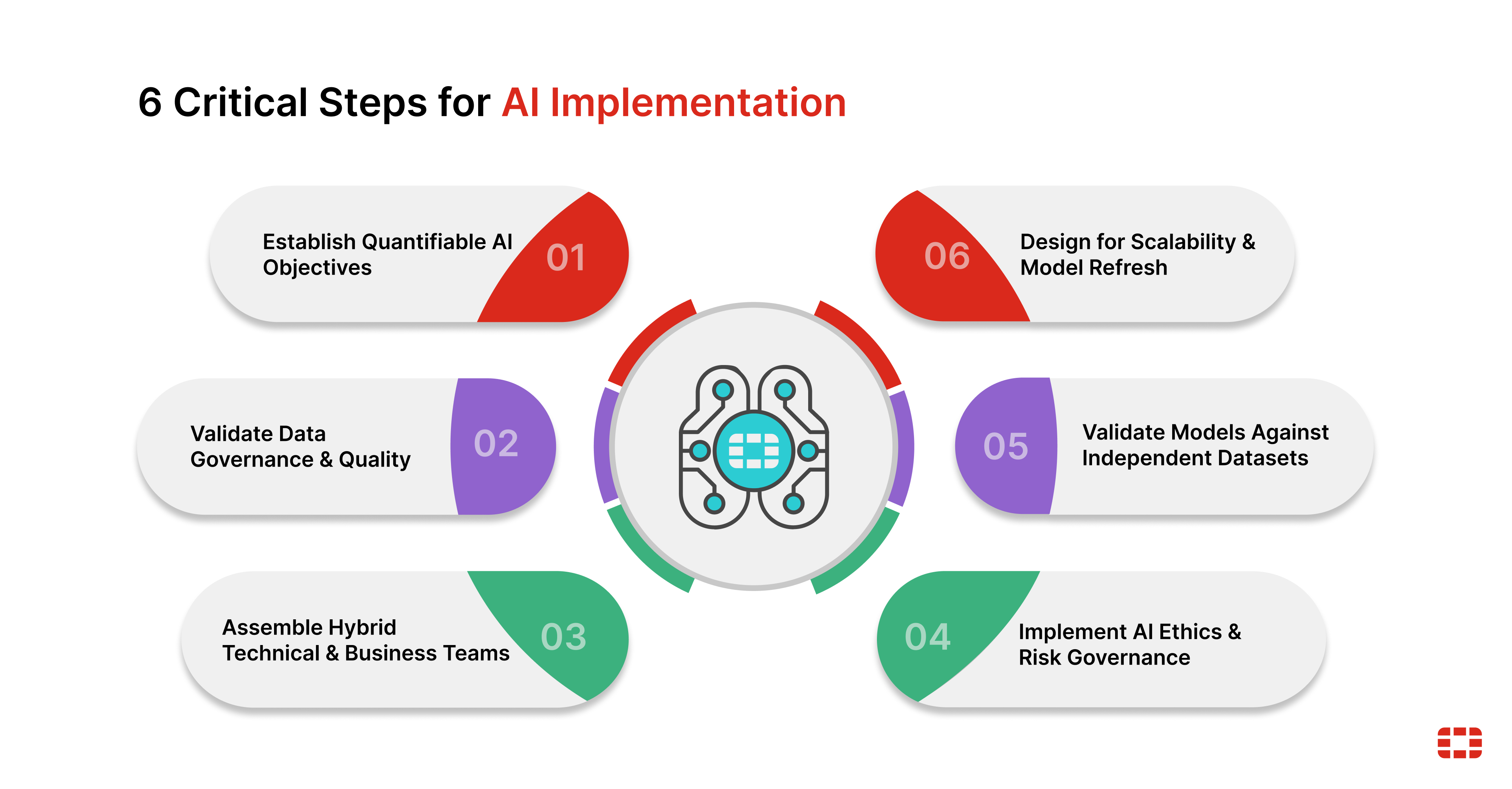
Run the pilot with a small group of end-users. Gather feedback on usability and accuracy, then iterate on the model and interface based on real-world performance data.
Develop a roadmap for integrating the solution into core workflows. Ensure IT teams have the resources to maintain the system and support additional departments as adoption grows.
No comments yet. Be the first to share your thoughts!